
When Maya, a 22-year-old graduate student from Shanghai, arrived at her university in Toronto last autumn, she faced a dilemma that millions of international students encounter every year: her laptop crashed two weeks before the tuition deadline, and her savings were tied up in a foreign account still being verified. The solution she found was a service she had never heard of back home — Buy Now Pay Later (BNPL).
“It let me split the $1,800 repair cost into four interest-free payments,” Maya told oversealoan.com. “Without it, I would have missed assignments and possibly had to defer my semester.”
Maya’s story is increasingly common across campuses worldwide. BNPL, once primarily associated with fashion retail and consumer electronics in Western markets, has rapidly evolved into a critical financial tool for the international student community — a demographic often underserved by traditional banks due to thin or nonexistent credit histories in their host countries.
Why Traditional Banking Falls Short for International Students
International students face a structural disadvantage when it comes to accessing credit. Most need a local credit history to qualify for a standard credit card — yet building that history requires having credit already. Add to that the complexity of visa restrictions, fluctuating income from part-time work, and the reality of being classified as non-resident aliens for tax purposes, and you have a perfect storm of financial exclusion.
According to U.S. Citizenship and Immigration Services (USCIS), the United States alone welcomed over 1.1 million international students in the 2023-2024 academic year. Similar volumes apply across the UK, Canada, Australia, and much of the EU. These students collectively spent an estimated $50 billion annually on tuition, living expenses, and consumer goods — yet a large portion of that spending operated outside formal credit infrastructure.
This gap is precisely what BNPL providers are rushing to fill.
How BNPL Works — and Why It Appeals to Students
BNPL services allow consumers to purchase goods immediately and pay for them in installments, typically over four to six weeks, with little to no interest charged if payments are made on time. Major providers include Klarna, Afterpay, Affirm, and PayPal Pay Later. Some services are integrated directly into merchant checkouts; others operate as standalone apps.
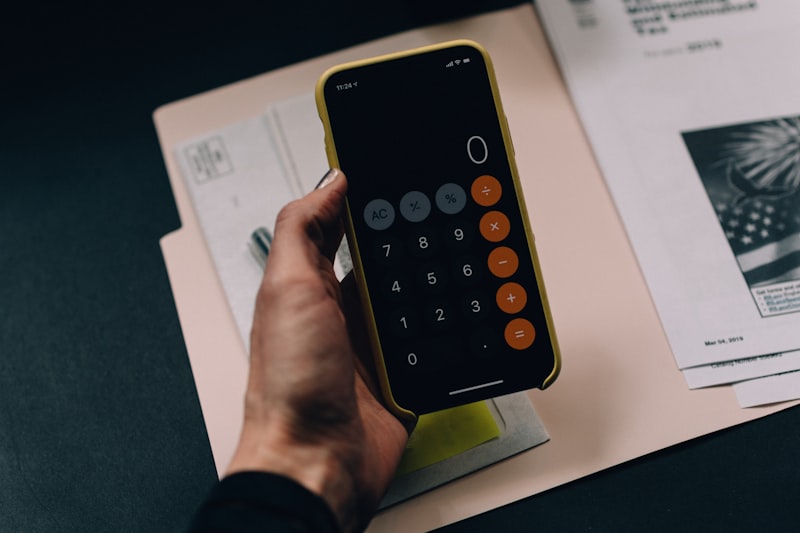
For international students, the appeal is straightforward:
- No credit history required: Many BNPL providers approve users based on alternative data — spending patterns, identity verification, and even enrollment status at partner institutions.
- Transparent fee structure: Unlike credit cards with complex APR calculations, BNPL shows students exactly what they owe and when, reducing the risk of unexpected debt accumulation.
- Speed: Approval often takes seconds, a critical factor when a student needs a laptop for a midterm tomorrow.
- Building credit: Some BNPL providers now report payment history to credit bureaus, allowing students to simultaneously spend and build their credit profile.
The Regulatory Landscape in 2026
The explosive growth of BNPL has not gone unnoticed by regulators. In the European Union, the Consumer Credit Directive (CCD2), fully implemented by 2026, now classifies most BNPL products as regulated credit. This means stricter affordability assessments, clearer information requirements, and better consumer protections — changes that benefit students significantly.
In the United Kingdom, the Financial Conduct Authority (FCA) introduced mandatory financial resilience checks for BNPL providers in 2025, reducing the risk of students being approved for loans they cannot realistically repay. The FCA’s guidance explicitly notes that vulnerable consumers, including students with limited financial literacy, deserve enhanced protection.
In Australia, where BNPL originated and remains most prevalent, the government enacted the National Consumer Credit Protection Amendment Act 2024, bringing larger BNPL providers under the same regulatory umbrella as banks. This means Australian international students now have access to dispute resolution mechanisms that were previously unavailable.

The BNPL and Student Car Loans Connection
While BNPL is most commonly used for consumer goods, its installment model is increasingly overlapping with the student car loan space. Several providers now offer larger BNPL-style financing for vehicles — particularly used cars from private sellers, a route many international students take to avoid dealer markup.
For students who qualify, this can mean financing a $5,000-$10,000 used car in six to twelve monthly installments rather than taking out a traditional auto loan that requires a Social Security Number (or equivalent) and a local credit history.
However, financial advisors caution that BNPL for vehicle purchases carries unique risks. Unlike consumer goods, cars depreciate rapidly, and missed payments can result in repossession — a particularly severe consequence for students on tight visa statuses where any legal trouble could jeopardize their right to remain in the country.
BNPL vs. Traditional Student Installment Credit: A Comparison
For international students weighing their options, here is how BNPL stacks up against traditional alternatives:
| Feature | BNPL | Student Credit Card | Campus Emergency Loan |
|---|---|---|---|
| Credit history required | Usually No | Usually No (secured cards available) | No |
| Approval speed | Seconds | Days to Weeks | Hours to Days |
| Interest rate | 0% (if paid on time) | 15-25% APR typically | 0% (often subsidized) |
| Max credit limit | $500-$2,000 typical | $500-$5,000 | $500-$3,000 |
| Reports to credit bureau | Some providers | Yes | Usually No |
| Available abroad | Increasingly Yes | Limited | No |
Best Practices for International Students Using BNPL
Financial educators urge students to treat BNPL with the same discipline as any credit product. Here are key guidelines:
- Only borrow what you can repay within the promotional period. Late fees on BNPL products can rapidly exceed the original purchase amount.
- Use BNPL for necessities, not lifestyle upgrades. The convenience of splitting payments can encourage overspending if not kept in check.
- Track all your BNPL obligations. Many students use multiple BNPL providers simultaneously without realizing the cumulative debt load.
- Verify regulatory coverage. Not all BNPL providers are regulated in all jurisdictions — check whether your provider is covered by your country’s consumer protection regime.
- Consider BNPL as a stepping stone. The best long-term strategy is to use BNPL’s ease of access to build credit, then transition to lower-rate credit products as your financial profile matures.
The Road Ahead: BNPL as Financial Inclusion Infrastructure
The convergence of BNPL, international student finance, and overseas Chinese finance represents something broader: the democratization of credit access for populations that traditional financial institutions have historically excluded.
For the millions of students, young professionals, and immigrants who cross borders each year carrying skills and ambition but little credit history, BNPL is not just a payment tool — it is a bridge to financial participation in their new homes.

As regulatory frameworks mature and competition among providers intensifies, the 2026 BNPL landscape promises lower fees, better consumer protections, and increasingly tailored products for the international student community. The question for students is not whether to engage with these tools — but how to do so wisely.
For more guidance on managing student finances abroad, explore our comprehensive financial education resources, or browse our financial guide for overseas Chinese and international learners.